
What carbon film does well
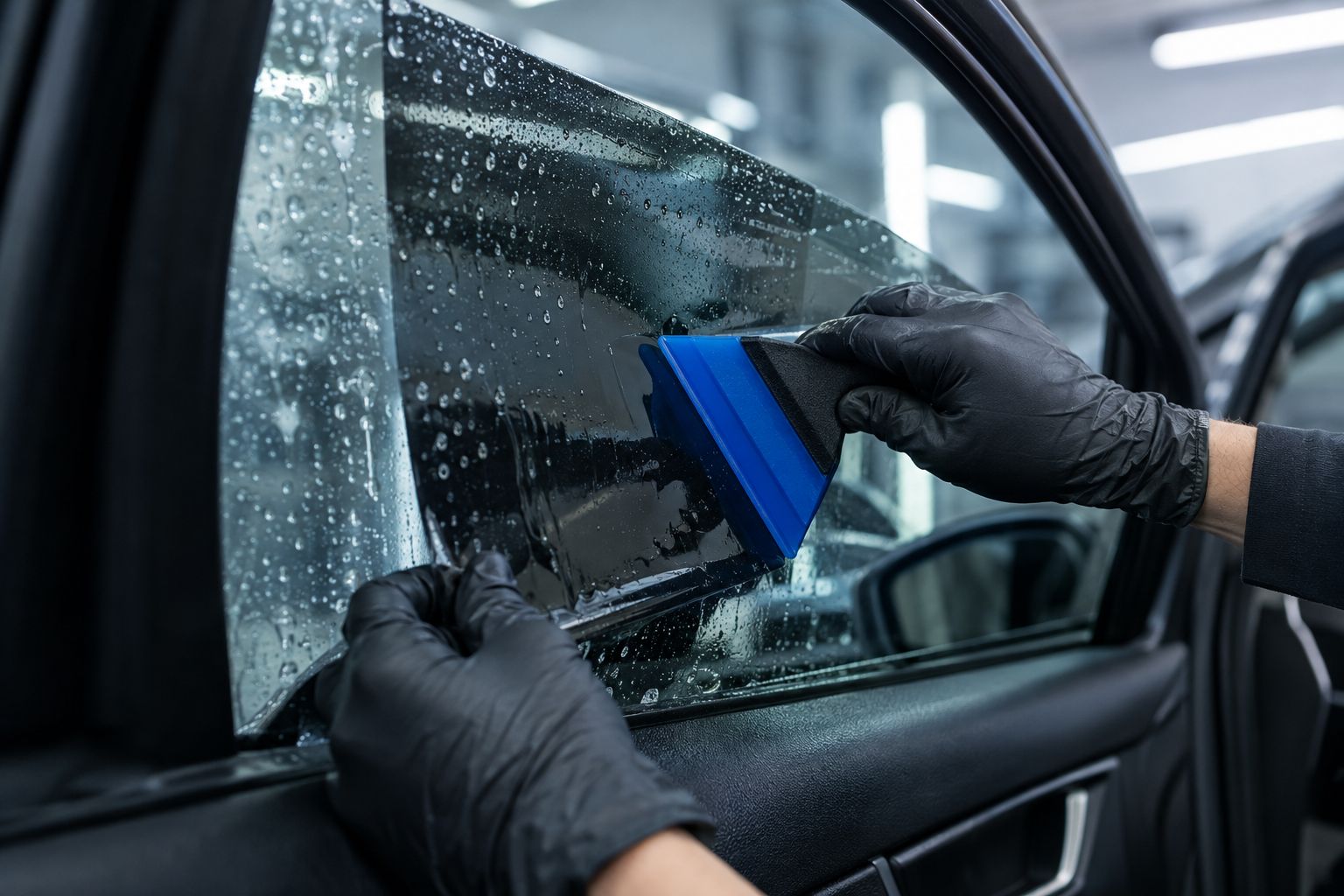
Carbon film uses carbon particles to block light and some heat. It has a clean matte look, will not fade to purple like old dyed films, and does not interfere with electronics. It is a strong value choice for daily drivers.
What ceramic film does better
Ceramic film uses non-metallic ceramic particles that are especially good at rejecting infrared heat, the part of sunlight you feel on your skin. Because Massachusetts limits you to 35% VLT, that heat rejection matters: ceramic lets you stay legal and still feel a real difference.
Side-by-side
Carbon Film
A clean matte-black look that won't fade to purple.
Heat rejectionGood
Glare controlBetter
Signal friendlyYes
- Blocks UV rays that fade interiors
- Factory-look finish
- Great value for daily drivers
Most chosen
Ceramic Film
Serious heat rejection without needing to go dark.
Heat rejectionBetter
Glare controlBest
Signal friendlyYes
- Cooler cabin even at legal shades
- Crystal-clear night visibility
- No interference with phone, GPS or keyless entry
Ceramic IR
Top-tier infrared blocking for maximum comfort.
Heat rejectionBest
Glare controlBest
Signal friendlyYes
- Highest infrared rejection we offer
- Ideal for EVs, black interiors and long commutes
- Windshield-strip and full-car packages
Which one is right for you?
- Choose carbon if you mainly want privacy, a finished look and UV protection at a great value.
- Choose ceramic if heat and glare bother you, you commute long distances, or you have a dark interior.
- Choose ceramic IR for EVs, glass roofs and maximum comfort.
Still unsure? We bring samples to every quote and can show you the difference with a heat lamp.